
Sex Offender Checks in Webb County
The Texas Department of Public Safety, or DPS, publishes the Texas Public Sex Offender Registry. It is the first official channel for a Webb County search because it combines records sent and checked by local registration authorities across Texas. Select Webb in the county field for a countywide view. A name search works best when the person is known. An address, city, ZIP, radius, or map search is more useful for learning what the registry reports near a Webb County location.
The registry has a narrow job. It gives notice about people who must register under Texas law. It is not a list of every arrest, conviction, or person on supervision in Webb County. For a broader account of how local arrest, court, and state records differ, use the Webb County criminal history overview. Registry entries can change when a local authority verifies a move, adds a vehicle, corrects an offense field, or reports a change in compliance.
Start with more than one known fact. A common name alone can lead to the wrong Webb County profile. Compare a full name, age, physical traits, location, and the displayed registration details before drawing a conclusion.
Webb County Registry Geography
Place searches in Webb County need the right local label. Use Laredo for most addresses in the county seat, Rio Bravo or El Cenizo for those incorporated cities, and the county filter for addresses outside city limits. A city-only search can miss a person whose registered address uses another postal label or falls in an unincorporated part of Webb County. The map and radius controls help test the same area from a second angle.
Street information is registration data, not a live claim about where someone is at each moment. Review the verification date and status with the address. If an address seems stale, do not visit it or confront anyone. Report the concern to the police department or sheriff that serves the location so staff can check it through official procedures.
How to Search the Texas Public Sex Offender Registry
The Texas DPS registry search is free and supports name, address, and location paths. The field chosen at the start controls which other boxes matter. For example, a last name is conditional for a name query, while an address and radius work together for a proximity query. Search controls may change, so use the labels shown by the live system.
- Open the DPS public registry and read its terms and search options.
- Choose a name, address, or map path. Add Webb County, a city, ZIP code, or radius when the option fits.
- Review the result list without relying on a name alone. Compare age, location, physical details, and status.
- Open the full profile. Read the offense, registration status, address type, risk level, and latest verification information together.
| Field or control | Type | Required | Use in Webb County |
|---|---|---|---|
| Search type | Tabs or options | Yes | Choose name, address, or map/location |
| Last Name | Text | Conditional | Starts a name search |
| First and Middle Name | Text | Optional | Narrows similar names |
| Address | Text | Conditional | Starts a proximity search |
| City | Text or dropdown | Optional or conditional | Try Laredo, Rio Bravo, or El Cenizo |
| County | Dropdown | Optional | Select Webb |
| ZIP Code | Text | Optional | Narrows the location |
| Radius | Dropdown | Conditional | Use the distances offered by the live form |
| Map or List | View controls | No | Changes how results appear |
The DPS search-form source shows how Texas presents the name, address, and map choices.
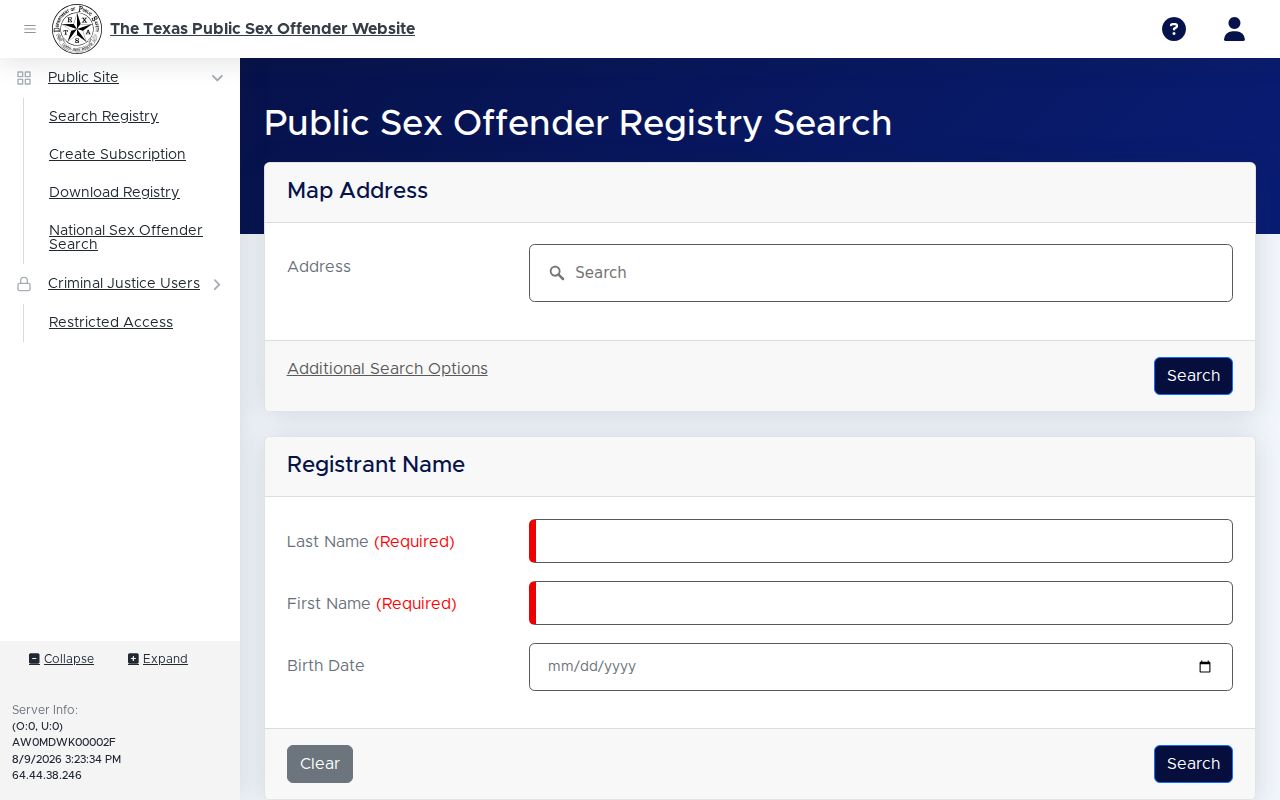
The captured interface helps a Webb County searcher distinguish a person query from a location-based safety check.
Webb County Registry Versus NSOPW
DPS is authoritative for Texas corrections and the public Texas profile. The U.S. Department of Justice's National Sex Offender Public Website, or NSOPW, adds a cross-state search across participating jurisdictions. That wider layer helps when a person may have lived outside Webb County or across a state line. It does not replace the Texas source. NSOPW routes users back to the jurisdiction that supplied the result, and that source remains the place to read current Texas details.
The official NSOPW search shows the national entry point and its jurisdiction-based results.
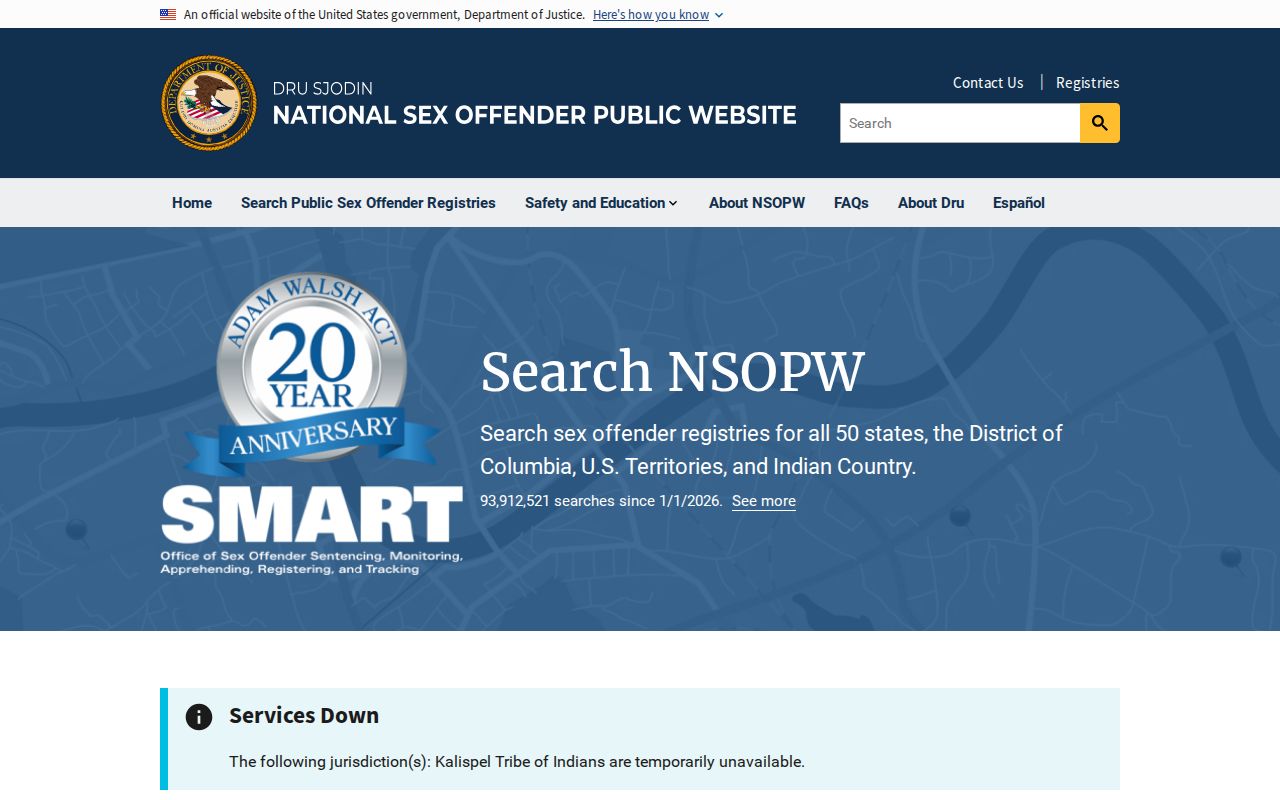
For a Webb County match, follow the national result back to DPS and compare the Texas profile's current status and verification data.
Inside a Registry Profile
A Webb County registry profile joins identity clues, registration facts, and reportable-offense information. Read those groups together. A photograph and physical description can reduce a common-name error. The primary, secondary, or transient address label explains how the location is classified. The offense fields describe the event that created a duty to register; they do not allege that a new offense occurred at the listed Webb County address.
| Name and Aliases | Primary name plus alternate names reported in the registration record |
|---|---|
| Photo and Description | Photograph, sex, race, age or birth data, height, weight, hair, eyes, and identifying marks |
| Registry Identifiers | Texas SID, registration status, risk level, and compliance or absconded indicators |
| Registered Locations | Primary, secondary, or transient address and school or institution facts when law permits publication |
| Vehicle Details | Published vehicle description and license information |
| Verification Data | Registration and verification dates used to judge how recently a fact was checked |
| Reportable Offense | Description, statute, conviction or adjudication date, court, and permitted victim descriptors |
The DPS registry profile source displays the field layout without changing the legal meaning of any entry.
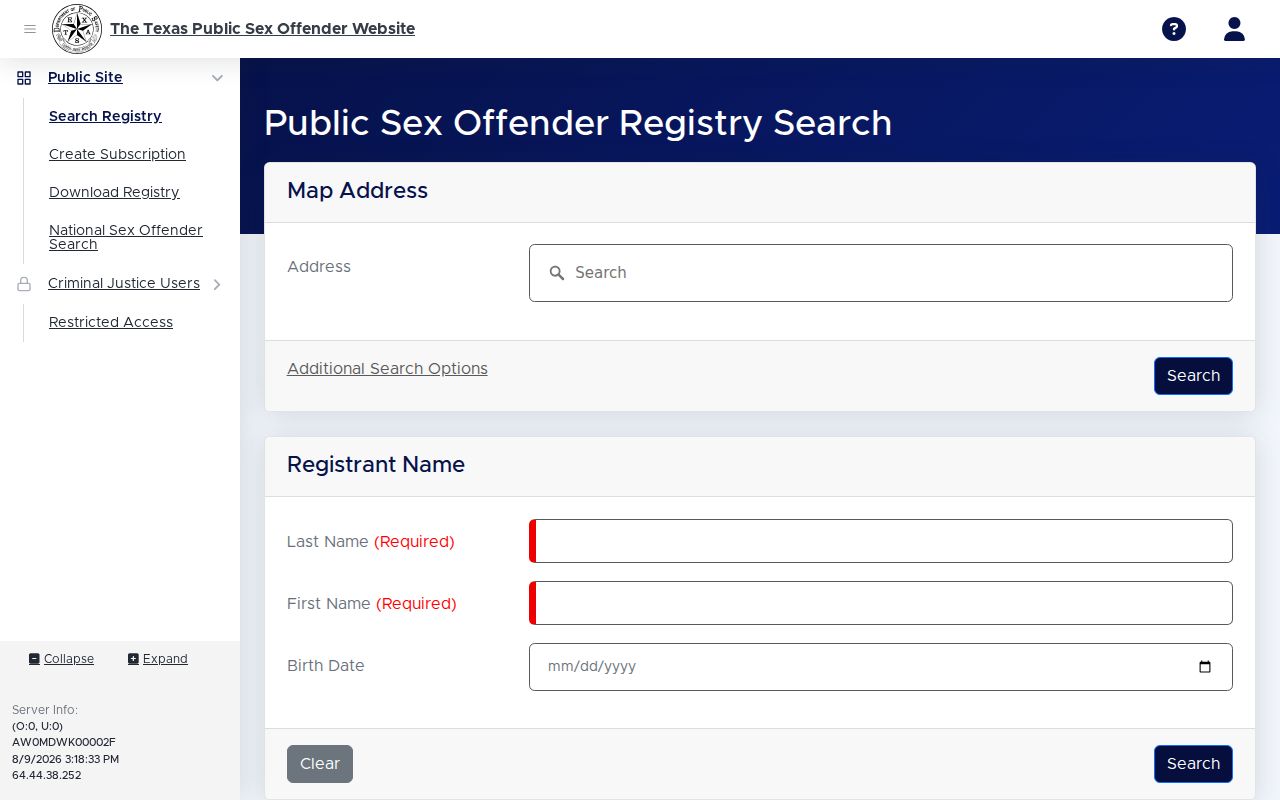
The profile layout makes clear why Webb County readers should compare status, dates, offense facts, and location instead of focusing on one field.
Webb County Registry Is Not Parole
A duty to register and a term of parole are separate legal matters. The Texas Department of Criminal Justice Parole Division supervises people released on parole, while DPS publishes the registry and a local Webb County authority verifies registration facts. One person may be subject to both systems, one, or neither. A registry profile therefore does not state the full terms of supervision. It also should not be read as a parole-office case file.
The TDCJ Laredo District Parole Office directory illustrates the separate state supervision channel serving the Webb County area.
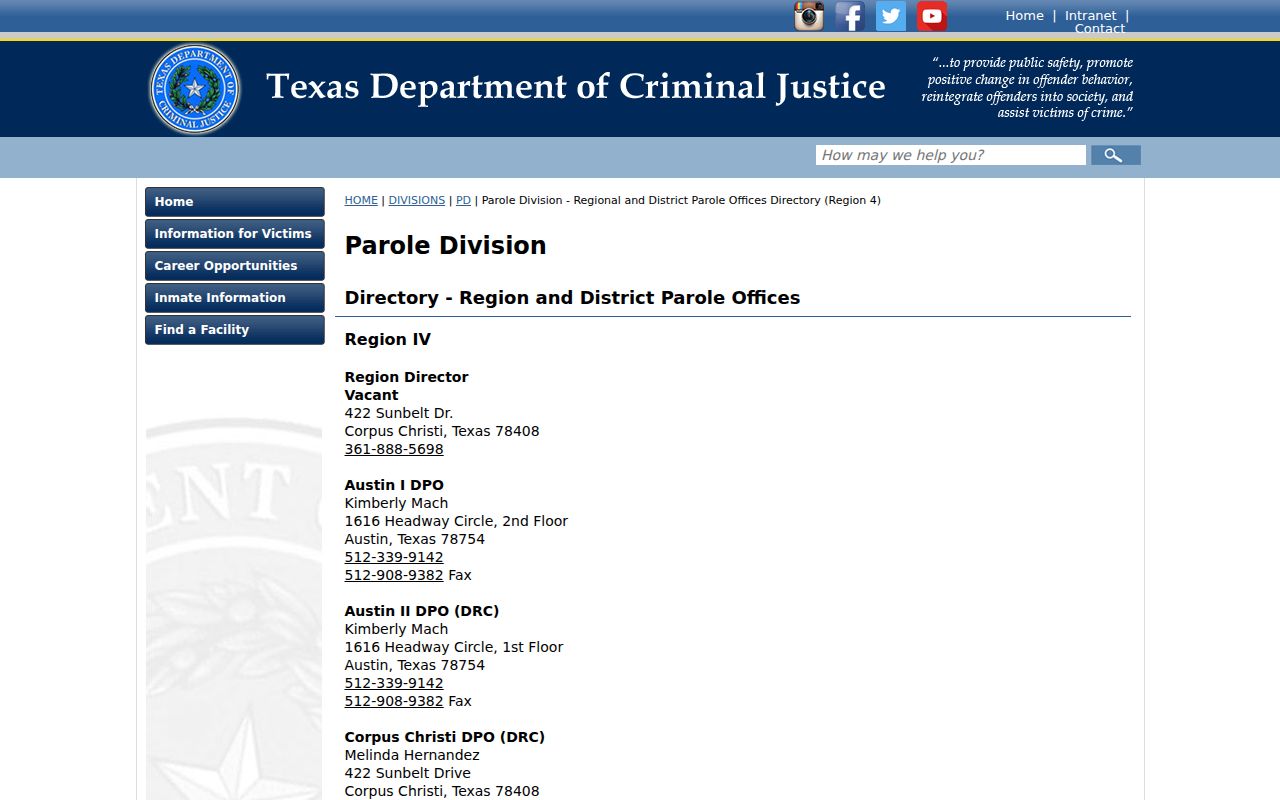
Keeping the two channels apart prevents a Webb County registry search from being mistaken for a complete supervision record.
Texas Registration Levels and Requirements
Texas profiles may display low, moderate, or high risk, numbered one through three. Those values come from a state risk assessment. They are not the same as the federal SORNA Tier I, II, and III labels. More important, the risk label does not by itself decide how long a Webb County resident must register. Duration turns mainly on the reportable offense and the rules in Texas Code of Criminal Procedure Chapter 62.
| Texas category | General duration rule | Public visibility and reading point |
|---|---|---|
| Lifetime | Offenses listed in Article 62.101(a), subject to statutory details | Do not infer this term from a high-risk label alone |
| Post-duty 10-year period | Other reportable convictions or adjudications under Article 62.101(b), generally ten years after release or discharge from supervision, whichever is later | The start date matters as much as the offense label |
| Juvenile provisions | Special rules, often ten years after disposition or release, subject to the statute and court modification | Adult duration assumptions may be wrong |
The full Texas Chapter 62 text controls verification, change reporting, duration, risk assessment, and removal. High-risk or civil-commitment status can affect how often a person must check in. The profile alone may not supply every fact needed to calculate a deadline.
Note: Low, moderate, and high describe Texas risk assessments; they do not form a simple ten-year, twenty-year, and lifetime ladder.
Webb County Registry Removal Paths
Removal from the registry is not automatic expunction of the underlying arrest or court file. Chapter 62 provides for removal when the legal registration duty expires and DPS verifies the required notice or request. It also contains narrow petition paths, including certain young-adult cases and early termination for some people who meet federal minimum-duration and approved risk-assessment rules. A Webb County profile does not prove that a person qualifies.
Expunction follows a separate statute and court process. The Webb County District Clerk publishes local agency addresses so a qualifying petition can identify the offices holding an arrest record. That list serves a different task from a Chapter 62 removal request. Someone dealing with both issues should identify each process, its court or agency, and the records it can affect before filing anything.
The Webb County District Clerk's expunction agency page demonstrates the separate local record-clearing route.
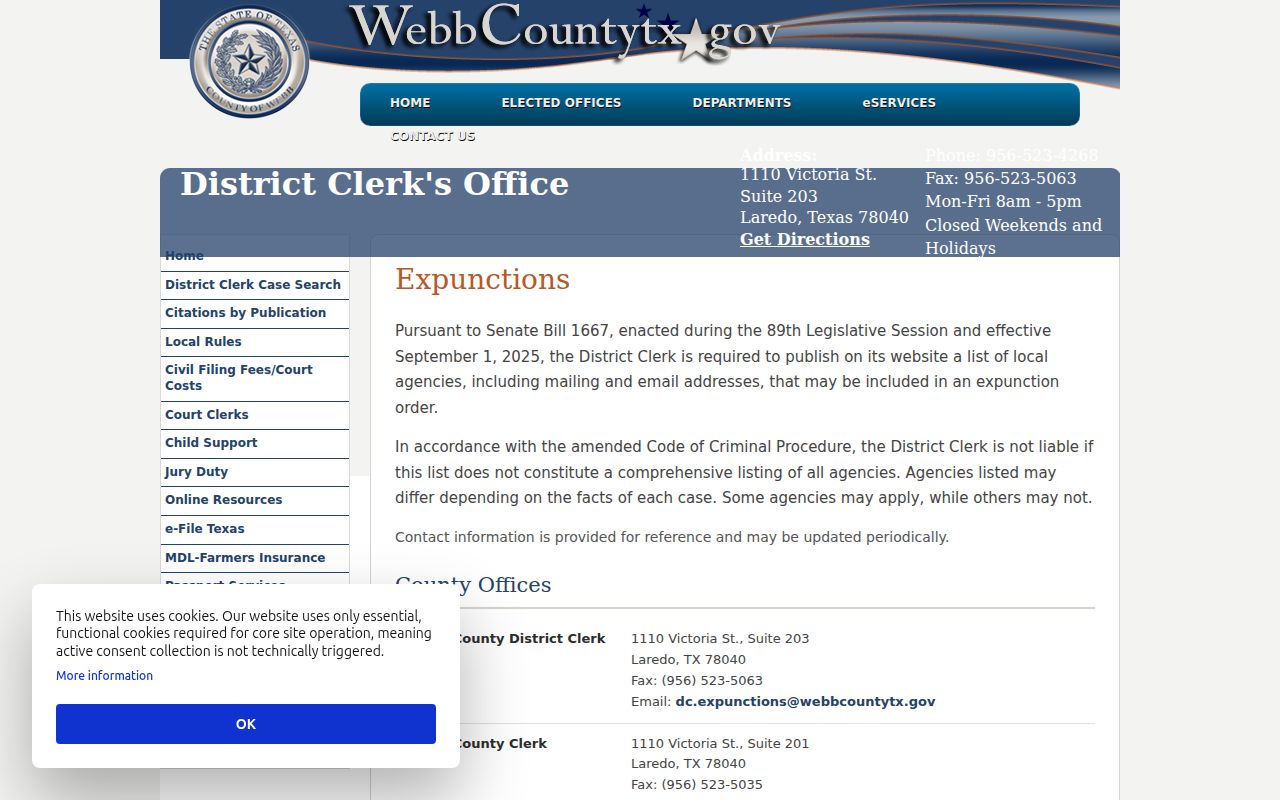
The local list helps Webb County readers avoid treating registry removal and destruction of eligible arrest records as the same legal result.
Community Notification and Lawful Use
The registry supports public notice, neighborhood awareness, and practical safety planning. It does not authorize a searcher to punish, threaten, shame, or monitor a listed person outside the law. Webb County residents should verify a result, consider its date and status, and direct a suspected violation to the agency that can investigate it. Never confront a registrant or household member. A listed address is not proof of new unlawful conduct at that place.
When a profile appears stale or shows noncompliance, record the public profile reference and the field that caused concern. Contact the police department serving Laredo, Rio Bravo, or El Cenizo, or contact the Webb County Sheriff's Office for the county area. DPS is the statewide correction point for the Texas registry. Emergency facts should go to emergency services, while a data concern should follow the registry and local-authority channels.
Criminal misuse warning: Harassing, threatening, or intimidating a person with Webb County registry information can be a crime. Texas Code of Criminal Procedure Chapter 62 governs registry publication and duties; other Texas criminal laws govern threats and harassment.
A careful Webb County sex offender search ends with context, not confrontation. Confirm the current Texas record, use the local authority for a factual report, and treat each profile as a statutory notice rather than proof of present misconduct.